
How to Ask for Postpartum Support Without Feeling Guilty

You grew a human. You gave birth. And somehow you still feel like you should be managing everything on your own.
Asking for help is one of the hardest things for many new mothers — particularly in a culture that celebrates independence, efficiency, and the mythical mother who "bounced back" in two weeks. The pressure to appear capable, grateful, and fine can make it genuinely difficult to say: I need help.
But here's what's true: you need help. All new mothers do. The expectation that you shouldn't is not wisdom — it's a modern aberration from the way human communities have always supported their mothers.
Why We Struggle to Ask
The guilt around asking for postpartum support often comes from a few places:
We don't want to be a burden. We're aware that other people have their own lives, demands, and exhaustion. Asking feels like adding to someone else's load.
We feel like we should be able to manage. The cultural myth of the capable, self-sufficient mother runs deep. Needing help can feel like failure.
We're not sure what we need. When everything feels hard, it's difficult to articulate specific requests. "I'm struggling" can feel too vague to ask for help with.
We were raised not to ask. Many of us learned that asking for help was weakness, imposition, or ungrateful.
These feelings are understandable. They're also worth gently challenging.
A Reframe Worth Holding
In virtually every culture throughout human history, new mothers were surrounded by their community. Extended family, neighbors, village members — someone was always present to cook, hold the baby, tend to the household, and watch over the mother.
You are not meant to do this alone. The instinct to ask for support isn't weakness — it's an ancient and appropriate response to a genuinely demanding situation.
Your wellbeing also directly affects your baby's wellbeing. A fed, rested, supported mother is better equipped for the demands of new parenthood. Asking for help is not just for you — it's for your whole family.
How to Ask in Practical Terms
Be specific. "Let me know if you need anything" is well-intentioned but hard to respond to. Specific requests are far easier for people to act on. "Could you bring dinner on Tuesday?" "Could you hold the baby for an hour on Saturday so I can sleep?" "Could you pick up groceries if I send you a list?"
Use your registry. A postpartum registry is, at its core, a structured way of asking for support. It communicates your needs clearly and gives people concrete, actionable ways to show up. Share it without apology.
Set up a meal train. A meal train (via MealTrain.com or TakeThemAMeal.com) organizes food support without requiring you to coordinate it. Have a friend or partner set it up before baby arrives and share the link.
Let your partner, a friend, or your doula be your advocate. You don't have to do the asking yourself. Designating someone to communicate your needs, organize offers of help, and manage logistics is a legitimate and wonderful use of support.
Say yes when people offer. When someone says "let me know what I can do," practice saying: "Actually, yes — here's what would help." Accepting help graciously is its own skill, and it gets easier with practice.
What You Might Actually Say
"We're setting up a meal train — would you be willing to sign up for a slot?"
"I'm building a postpartum registry focused on my recovery. It would mean so much if you'd take a look."
"I'm really struggling with [specific thing]. Is there any chance you could help with [specific ask]?"
"The best gift you could give right now would be [groceries / an afternoon to nap / someone to hold the baby while I shower]."
You deserve support. Asking for it is not a burden — it's an act of self-awareness and self-respect. The people who love you want to help. Let them.
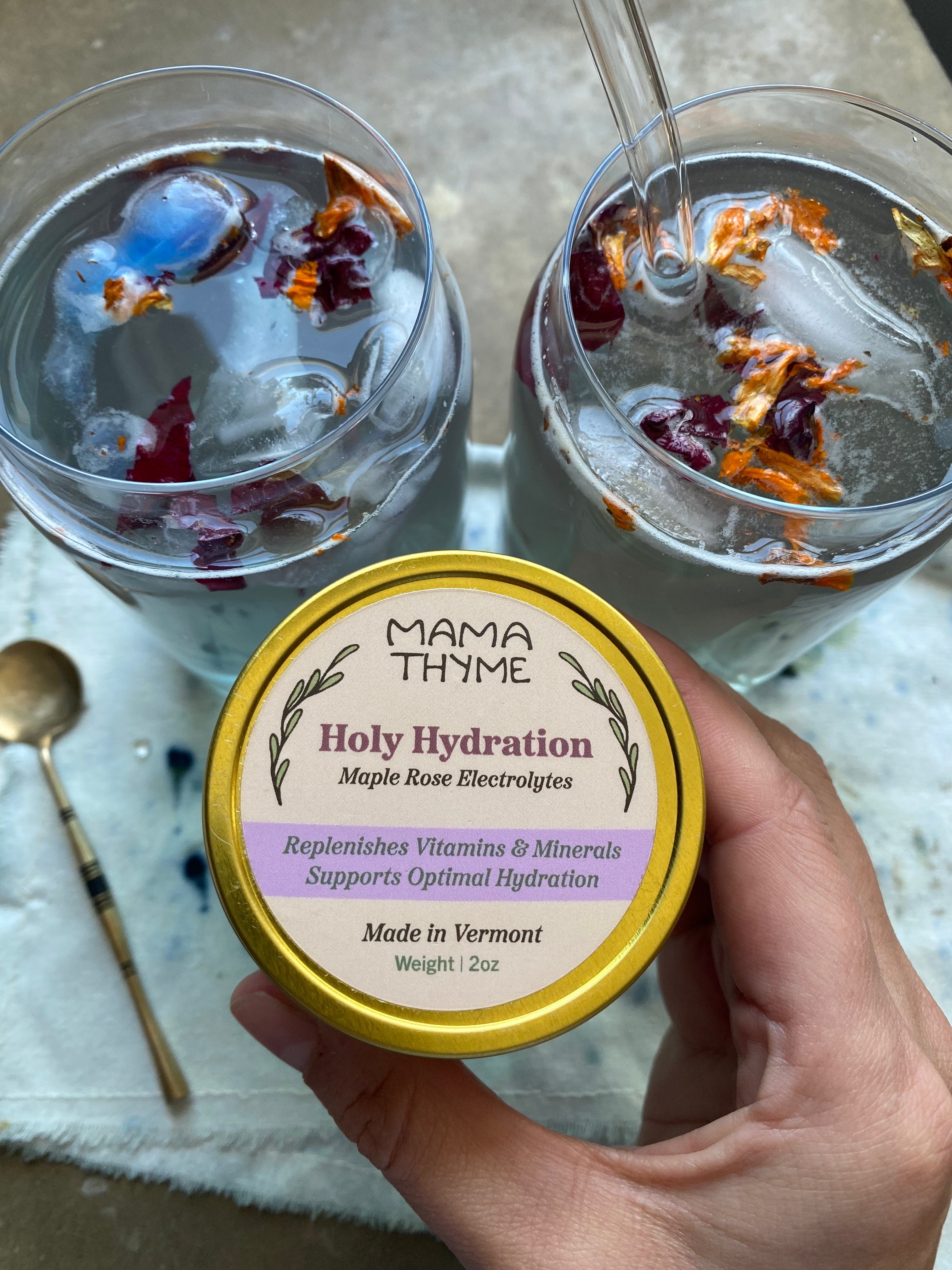
Our postpartum collection at Mama Thyme makes a beautiful, nourishing addition to any postpartum registry — and a meaningful gift for anyone who wants to support a new mother in their life.

Comments